
The Feedback That Made Me Question Everything
How new managers can bounce back after criticism

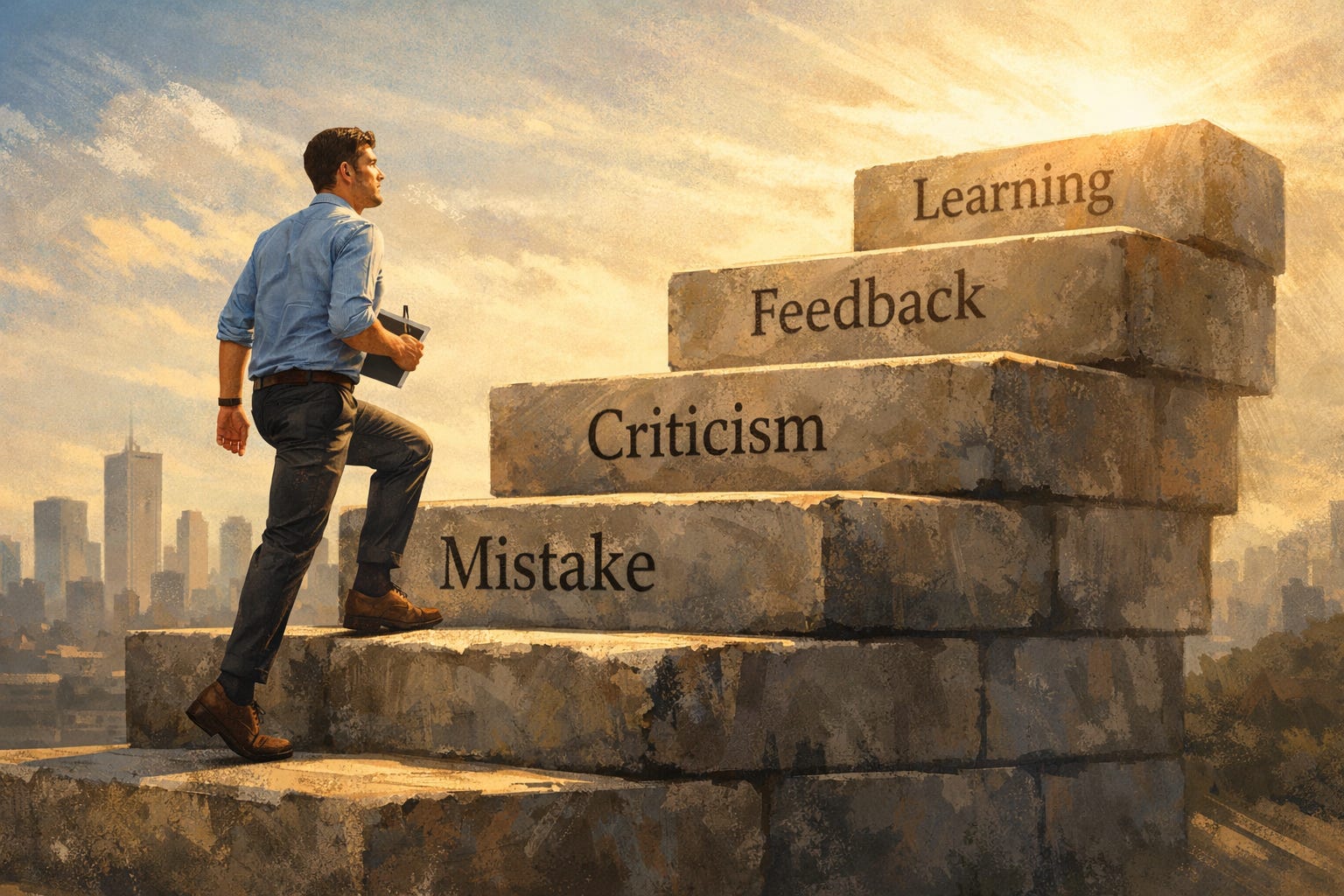
The day I thought I failed as a leader
I still remember the first time I received tough feedback as a new manager.
I had just finished leading a team meeting that I thought went well. I prepared carefully, explained our priorities, and asked everyone for updates. In my mind, I was doing what a leader should do.
Later that afternoon, my manager asked to talk.
She said something that stayed with me.
“Your team understands the tasks. But they don’t feel heard yet.”
That sentence hit me harder than I expected.
As a new leader, I wanted to prove I deserved the role. I wanted my team to see me as capable and confident. Instead, the feedback made me question everything.
Was I talking too much?
Was I missing something obvious?
Was I actually a bad manager?
For a few hours, my confidence collapsed.
If you’re stepping into leadership for the first time, you may recognize this feeling. A single piece of criticism can feel like proof that you’re not ready for the job.
But over time, I realized something important.
That moment became one of the most valuable leadership lessons I’ve ever had.
Why setbacks hit new managers so hard
New leaders often struggle to bounce back from setbacks for one simple reason.
Your identity is still forming.
When you are new to leadership, every decision feels like a test. Every mistake feels public. Every criticism feels personal.
Psychologists call this identity-based feedback. When we are building a new professional identity, feedback can feel like a judgment of who we are, not just what we did.
That’s why small setbacks can feel disproportionately heavy.
But experienced leaders learn something that changes everything.
Feedback is not a verdict.
It’s information.
The leadership insight that changed how I handle criticism
Here is the shift that helped me recover faster from setbacks.
Good leaders treat criticism as data, not as identity.
Instead of asking:
“Am I a bad leader?”
You ask:
“What is this feedback trying to show me?”
When I reflected on my manager’s comment, I realized something simple.
I had been running meetings like a presenter, not like a leader.
I focused on delivering updates clearly.
But I didn’t spend enough time listening.
The feedback wasn’t saying I was failing.
It was showing me the next skill I needed to build.
That insight changed the way I approached leadership challenges going forward.
Every setback became a signal pointing to a growth area.
The practical reset I now use after a leadership setback
Whenever I receive criticism or experience a leadership mistake, I now follow a simple three-step reset.
You can use this too.
Step 1: Separate emotion from information
Your first reaction will always be emotional. That’s normal.
Give yourself space to feel it.
Then ask one question:
“What is the useful signal in this feedback?”
Even poorly delivered criticism often contains something valuable.
Your job is to extract the lesson.
Step 2: Identify the skill behind the setback
Most leadership setbacks are not personality problems. They are skill gaps.
For example:
• Poor meeting engagement → communication skill
• Team confusion → clarity of expectations
• Slow progress → delegation skill
Once you identify the skill, the setback becomes solvable.
It turns into something you can practice.
Step 3: Apply the lesson immediately
Confidence doesn’t return through thinking.
It returns through action.
After that meeting feedback, I changed how I ran my next one-on-one conversations. I focused more on asking questions and listening carefully.
If you’re learning how to structure those conversations effectively, I previously shared a practical guide on how to run a 1:1 meeting as a new manager.
It walks through simple questions and structures that help leaders build trust and understanding with their team members.
Small adjustments like this create fast leadership growth.
Why your hardest leadership moments matter
Looking back, I’m grateful for that early criticism.
Not because it felt good.
But because it showed me the difference between managing tasks and leading people.
Every leader has moments where they feel exposed, uncertain, or not good enough yet.
Those moments are not signs you should step back.
They are signs that you are stepping into something bigger.
Leadership is not built in moments of comfort.
It is built in moments of correction.
A question to reflect on
Think about the last time you received criticism or experienced a setback at work.
What skill might that moment be pointing you toward developing next?